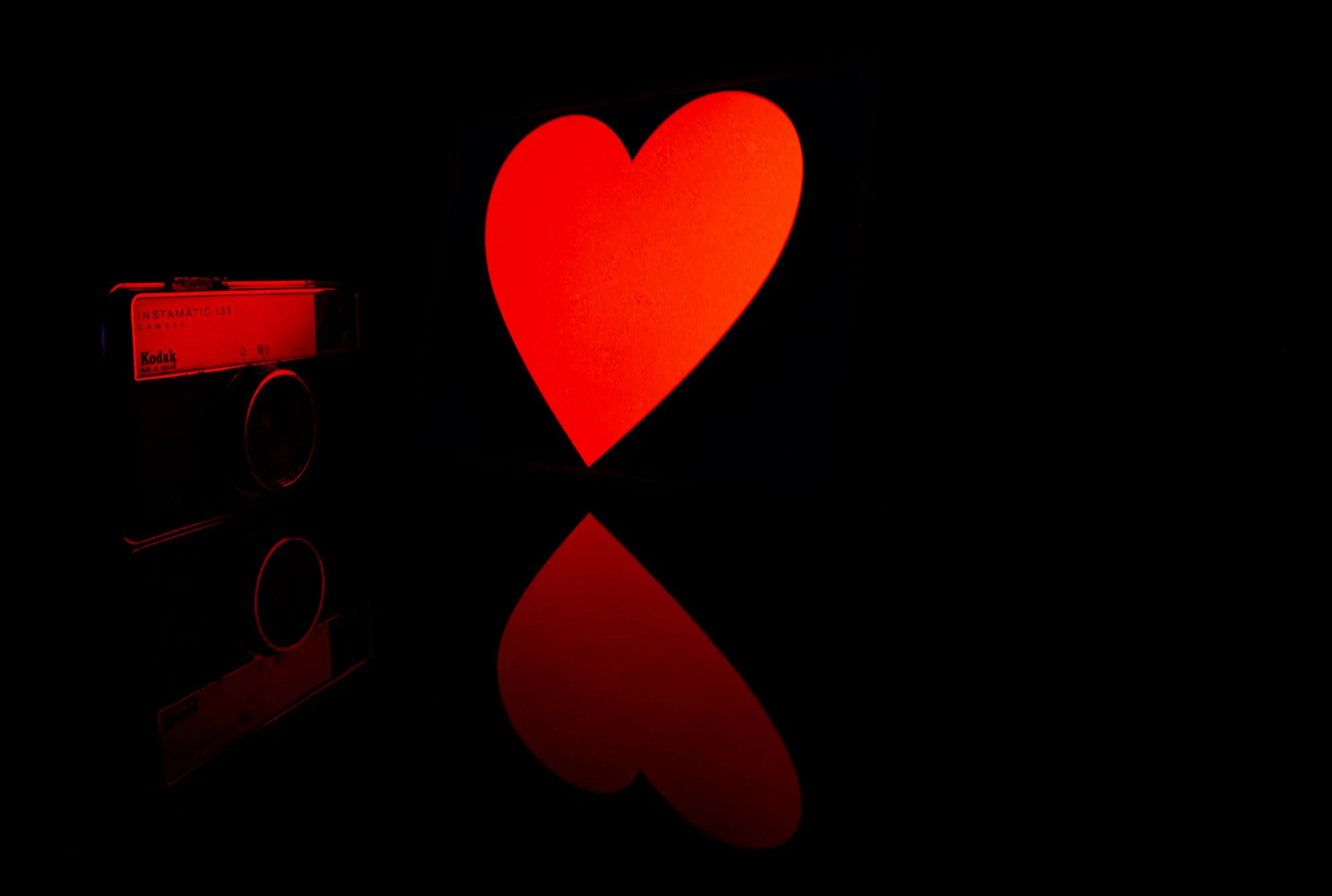
Anyone can buy the Camera....
A woman stopped me at an exhibition once, stood in front of a print for a long moment, and then asked the question I have been asked more times than I can count. "What camera did you use for this one?" She meant it kindly. They always do. Always a compliment dressed up as a technical question, because when a photograph moves someone, it feels natural to want to know what made it. Somewhere in the back of the mind sits the assumption that the object did the work and that if you could just get your hands on the same body, the same lens, the same filter, you could walk away with the same image. I used to answer that question the long way. I'd talk lenses, filters, tripods, the editing software I'd leaned on that day, happy to go as deep as anyone wanted to follow me. I still will, if asked. The equipment matters. It would be dishonest to pretend otherwise. Good tools remove friction and allow ideas to be realised more easily.
But standing in front of that print, something clicked that had been circling for years without quite landing. The camera never made the photograph. It only recorded what I'd already decided to give it.
The Same Place, Two Different Photographs
Picture two photographers standing in exactly the same spot. Same morning, same light, same model of camera in their hands. One frames the sweeping view opening up in front of them. The other crouches down and photographs a puddle at their feet, catching a fractured reflection of the same view in miniature. One waits patiently for a figure to walk into the frame and complete it. The other waits just as patiently for that same figure to leave, so the frame can stay empty. Nothing about their equipment explains the difference. The gear simply records whatever is placed in front of it. The photographer decides what deserves to be there in the first place. That distinction quietly fascinated me long before I could have put it into words like this.
What My Own Archive Told Me
It only became obvious once I started looking backwards instead of forwards. Scrolling through years of my own work, I began noticing things I had never consciously set out to do. Repeating lines, over and over. Water, almost always still. A pull towards strong geometry. Subjects standing alone. Light breaking through somewhere dark. I hadn't planned any of it. The photographs themselves had changed a great deal across the years, different places, different subjects, different cameras entirely but the things I kept instinctively reaching for stayed remarkably consistent. Nobody could have learned any of that from a spec sheet. It was written into the pictures themselves, whether I meant to write it there or not.
The Finish Line That Keeps Moving
That's roughly the point I stopped worrying about whether I owned the newest camera, or the sharpest, fastest lens on the market. Manufacturers will keep releasing something better next year. They always do. Chase that and you're signing up for a race with no finish line, because the moment you cross one, another appears just ahead of it. Your eye doesn't work on that kind of schedule. It can't be upgraded overnight, and thankfully it can't be discontinued either. It's built slowly, out of unglamorous things. The places you've stood in. The conversations that stuck with you longer than you expected. Books, music, disappointments, the small moments that quietly rearranged how you look at the world without announcing themselves at the time. Every photograph you take leaves a trace that shapes the next one, and given enough time, those traces start to add up to something recognisable, not a style you sat down and invented, but a way of seeing that simply became yours while you weren't watching.
Why I Stopped Looking at Single Photographs
That's probably why I've become far more interested in collections than in individual images. One photograph on its own can hide almost anything about the person who made it. Put fifty of them side by side, and the hiding stops. Certain colours keep turning up uninvited. Certain subjects reappear, again and again, whether you meant them to or not. You stop seeing only what you photograph and start seeing why. That's been the real lesson of the past couple of years, more than any new piece of gear or technique.
Technique Was Never the Destination
I spent a long stretch chasing technical knowledge, believing better technique would eventually translate into better photographs. It matters as it gives you the confidence to react when a moment appears and there's no time to think it through. But it was never the destination. It was only ever meant to get out of the way. Once the technical decisions become instinctive, your attention is finally free to go back to the thing that mattered from the very start. Noticing. Noticing light that only lasts a few seconds before it's gone for good. Noticing stillness in the middle of everything else moving. Noticing beauty in the places everyone else is walking straight past without a second glance. Those are the moments I still carry home with me.
What I'd Say Now
So if someone asks what camera I use, I'll still tell them. Happily.
But if they asked me what actually makes a photograph mine, I'd give them a completely different answer.