
Got the Bug
It is strange to look at this photograph now and realise just how much of my life can be traced back to one little ladybird sitting in my parents' garden.
It was 2012 and I'd been given a Canon compact camera for Christmas. There was no great ambition attached to it and certainly no thought that photography might become anything particularly significant. I had a new camera, I wanted to see what it could do, and like most people starting out I simply pointed it at whatever happened to be around me.
That day, one of those things was a ladybird.
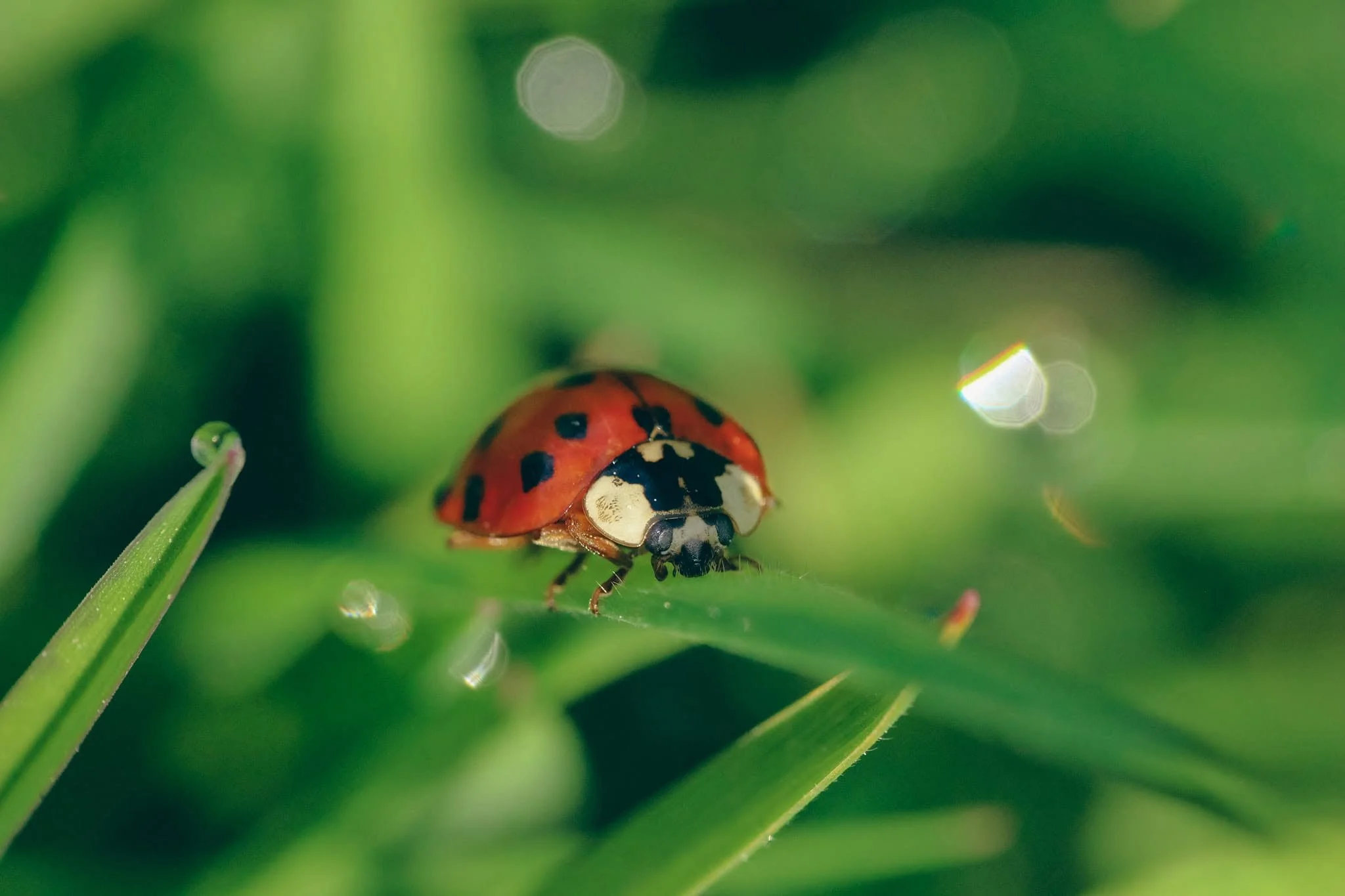
I remember getting down close and trying to photograph it amongst the greenery, fascinated by how different something so small could look when it filled the frame. I took a few more photographs around the garden afterwards, looking for insects, flowers, raindrops sitting on leaves, anything that might make an interesting subject. I wasn't thinking about composition, collections or developing a particular style. I was simply enjoying the process of finding something, looking at it through the camera and then being able to share what I'd seen with somebody else.
It sounds incredibly simple now, but there was something about that process that immediately appealed to me. Photography gave me a reason to pay attention to things I might otherwise have walked straight past. An insect on a leaf suddenly became something worth spending ten minutes with. A few drops of rain could completely transform an ordinary plant. Once I started actively looking for photographs, I began noticing just how much was happening in places I'd previously considered completely familiar.
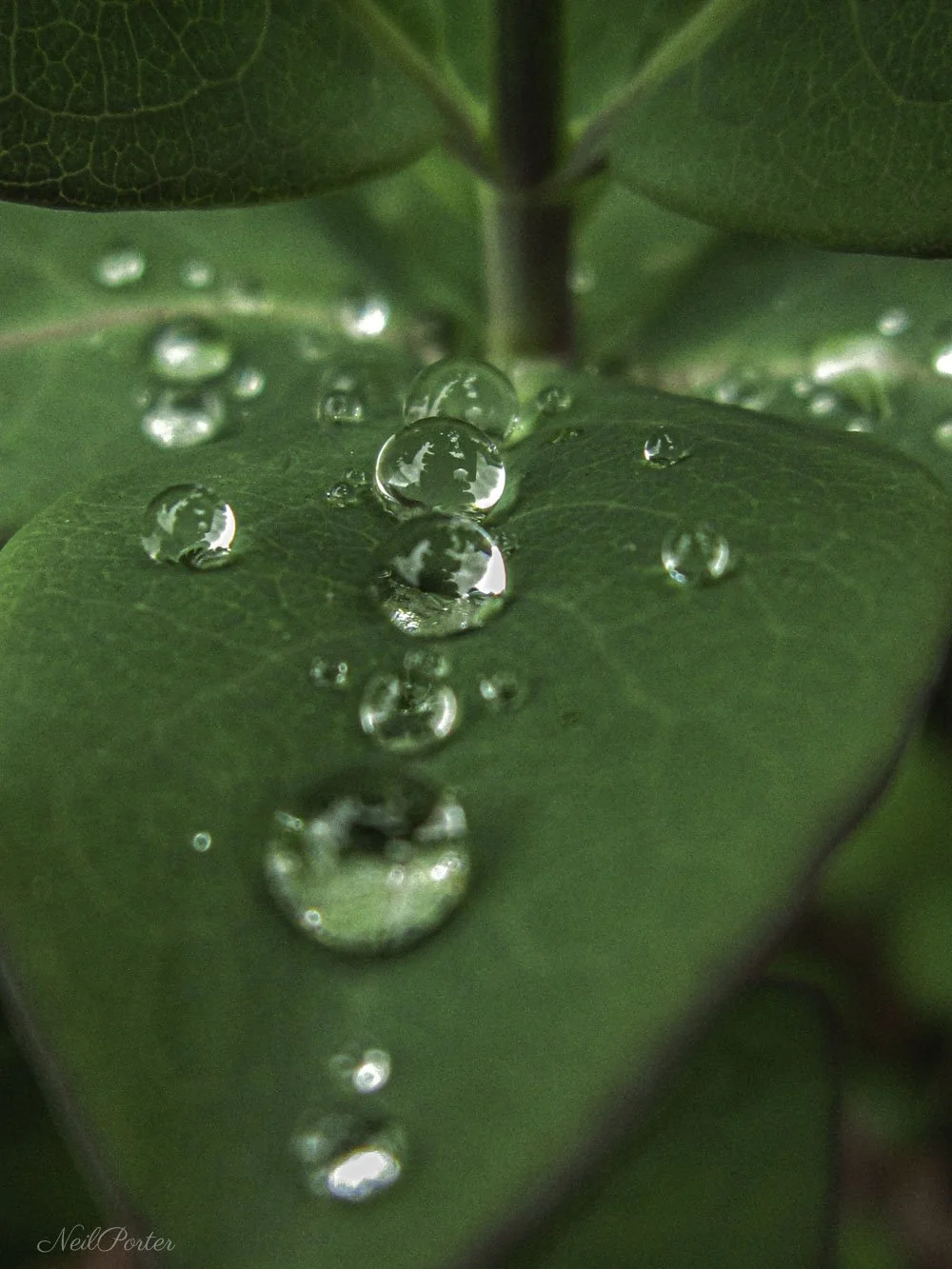
Looking back at the photographs from that day, there are little clues to the things that would keep catching my attention years later. I photographed these raindrops sitting on a leaf, fascinated by the way they held the light and distorted everything reflected inside them. I couldn't possibly have known where photography would eventually take me, but that fascination never really went away. Rain, reflections, water and the way light behaves around them have appeared throughout my work ever since. Perhaps some of the things that define how you see the world are there much earlier than you realise.
And yes, I quite literally got the bug for photography. Fourteen years later, I think I'm allowed to keep that joke.
It wasn't long before I wanted to explore a little further than my parents' garden. My uncle was already interested in photography and used a Canon DSLR, so I began joining him on visits to Brandon Marsh Nature Reserve. That opened everything up. Instead of searching one garden for subjects, I suddenly had birds, insects, plants, woodland, water and constantly changing light to work with. Every visit offered something different, and after only a few trips it became obvious that this wasn't going to be another hobby I'd pick up for a while and then quietly abandon.
I absolutely loved it.
Part of the attraction was the photography itself, but I think an equally important part was the searching. You could walk around for ages without finding anything particularly interesting and then suddenly notice something that made you stop. There was a little sense of discovery every time that happened. The photograph became a way of saying, look at this, this is what I found today.
The compact camera had started everything, but inevitably I began wondering what I might be able to do with something more capable. My uncle's Canon meant I'd already become familiar with the brand, so I started saving for my first DSLR and eventually bought a Canon EOS 650D with a 55-250mm lens. At the time it felt like a huge step. Suddenly I had much more control over what the camera was doing, although having more control also meant having considerably more opportunities to get things completely wrong.
That was part of the enjoyment too. I learned by using it. I experimented, came home, looked through the photographs and tried to understand why some worked and others didn't. There was no pressure attached to any of it. Nobody was waiting for a collection to launch and there was no website needing another image. I could photograph something simply because I found it interesting, and those early years gave me an enormous amount of freedom to discover what interested me most.
One answer appeared fairly quickly.
I bought a 90mm macro lens.
That lens opened up an entirely different world.
Looking back at the photographs from that day, there are little clues to the things that would keep catching my attention years later. I photographed these raindrops sitting on a leaf, fascinated by the way they held the light and distorted everything reflected inside them. I couldn't possibly have known where photography would eventually take me, but that fascination never really went away. Rain, reflections, water and the way light behaves around them have appeared throughout my work ever since. Perhaps some of the things that define how you see the world are there much earlier than you realise.
Suddenly the tiny things that had fascinated me in the garden could be photographed with a level of detail I'd never seen before. Dragonflies and damselflies became particular favourites, along with butterflies, beetles, flowers and anything else that allowed me to explore that miniature world happening around us every day.
Macro photography also taught me patience, although perhaps not always willingly. You could spend ages slowly approaching an insect, find exactly the angle you wanted, get everything lined up and then watch it fly away just before you pressed the shutter. Eventually you learned to wait, watch and try again. When it did work, there was something incredibly satisfying about seeing details afterwards that had been almost impossible to appreciate with the naked eye.
That fascination has never really left me. My photography has expanded enormously since those days at Brandon Marsh, but dragonflies are still one of my favourite things to photograph and I can still happily lose a ridiculous amount of time waiting beside a pond for one to settle somewhere useful.
Looking back now, I think those early years taught me something much more important than how to use a camera. They taught me to notice.
That idea has been on my mind quite a lot recently because this year I've spent more time looking back through my photography than I probably ever have before. Rebuilding my archive meant revisiting work stretching across many years and deciding what still belonged there. Thousands of photographs eventually went, and the process forced me to think quite carefully about how my work had changed and what I actually wanted it to become.
The difference between the photographer who took this ladybird and the photographer I am now is enormous. My equipment changed, obviously, but that's probably the least interesting part of it. I learned about light, composition, editing and printing. I moved beyond nature and started photographing landscapes, coastlines, architecture, cities and abstract subjects. Eventually I stopped thinking purely in terms of individual photographs and began creating collections, looking for connections between images and becoming much more selective about what deserved to be shown.
LensArt grew out of all of that. Today an image might eventually become part of a carefully curated collection, a Series or even a Limited Edition. It will have a title, a story and a reason for being there. I'm far more interested now in what a photograph communicates and how it might make somebody feel when they live with it than I could possibly have imagined when I first picked up that compact camera.
Yet underneath everything that has changed, there is something surprisingly familiar about the way the process begins.
Something catches my attention and makes me look again.
That's really what happened with the ladybird. It wasn't an important subject and I certainly wasn't making an important photograph. It was simply a tiny moment when something ordinary became interesting enough for me to stop and look at it properly.
I don't look back at that first photograph and judge it against the work I make today. That would rather miss the point. I can see plenty I'd do differently now, but I wouldn't want to change it. Its value has nothing to do with whether it would make one of my collections or whether I'd ever put it on a wall, its value is that it reminds me where all of this started.
A Christmas present. My parents' garden. A little Canon compact camera and a ladybird.
I had absolutely no idea where it would lead.
I'm rather glad I pressed the shutter.